

This is what we call high-functioning stress—a state where your nervous system stays activated, even when your life appears “under control.”

What Is High-Functioning Stress?
Unlike burnout, it doesn’t stop you.
It keeps you going—but at a cost.
At a biological level, stress is regulated through the hypothalamic–pituitary–adrenal (HPA) axis, which controls the release of cortisol—the body’s primary stress hormone.
What Happens in the Body During Ongoing Stress?
Research shows that repeated stress exposure can:
- Alter brain regions responsible for memory and emotional regulation, including the hippocampus and prefrontal cortex
- Disrupt cortisol patterns, affecting mood, metabolism, and cognition
- Interfere with attention, decision-making, and cognitive flexibility
Over time, this doesn’t just feel like stress—it becomes your baseline state.
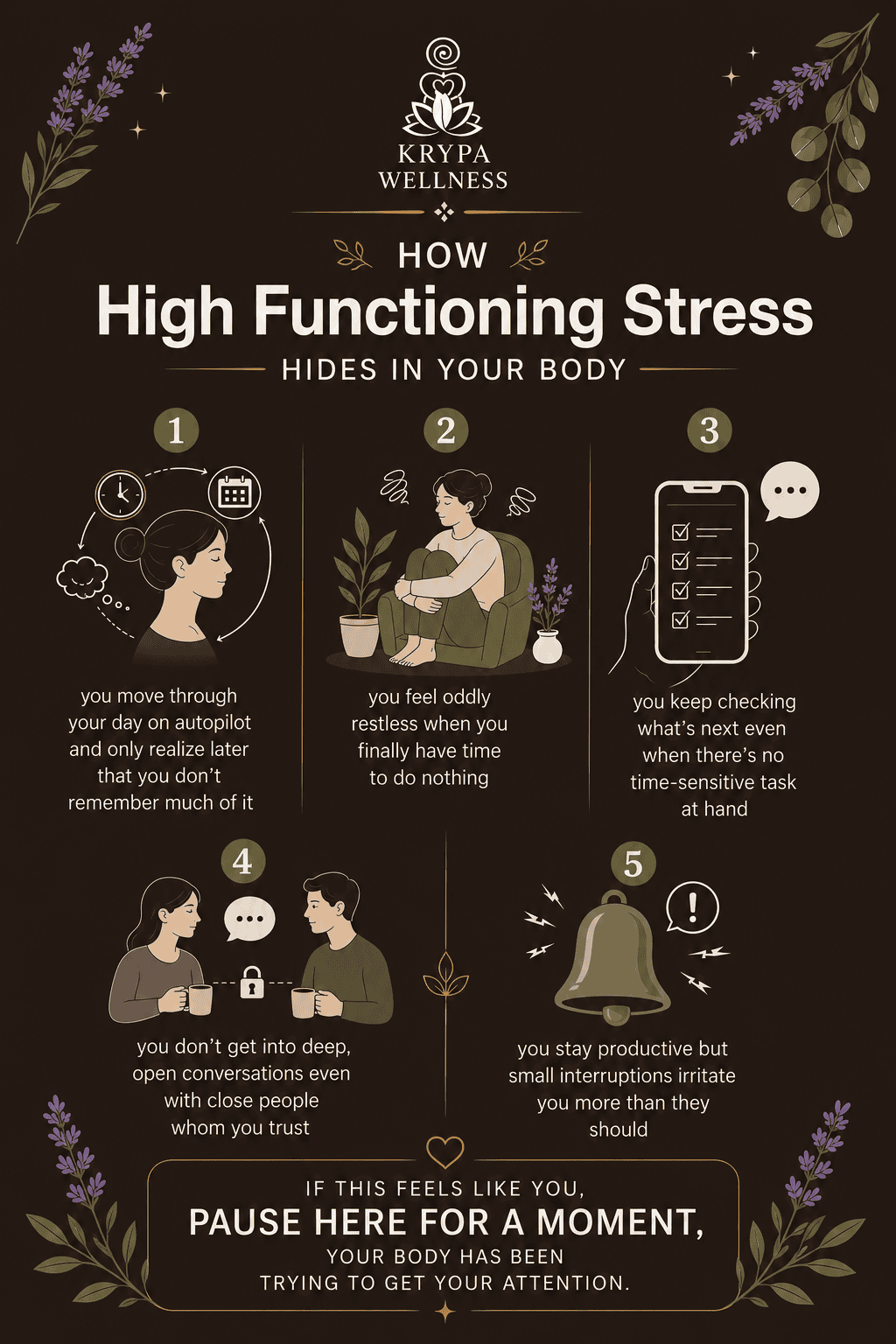
Subtle Signs of High-Functioning Stress
Instead of obvious exhaustion, you may notice:
1. Autopilot Living
2. Restlessness in Stillness
3. Constant Mental Scanning
You’re always thinking about the next step, even when nothing is urgent.
4. Emotional Surface-Leveling
Conversations stay functional, not expressive—even with people you trust.
5. Low Tolerance for Small Disruptions
Minor interruptions feel disproportionately irritating.
Why This Pattern Builds Over Time
Your nervous system is designed for efficiency.
If stress becomes frequent, the body adapts by staying slightly activated—so you can keep functioning.
This is called allostatic load—the cumulative wear and tear from repeated stress exposure.
Instead of cycling between stress and recovery, the body stays in a low-grade “on” mode.
And because you’re still productive, it rarely feels urgent enough to address.
The Missing Piece: Recovery, Not Productivity
Most people respond to stress by trying to manage time better, optimize routines, or push harder.
But high-functioning stress is not a time problem. It’s a regulation problem. Your body doesn’t need more efficiency. It needs signals of safety.
This is where practices like:
- conscious breathing
- sensory grounding
- olfactory stimulation (aromatherapy)
begin to play a deeper role.
How Aromatherapy Supports Stress Regulation
The sense of smell is directly connected to the limbic system—the part of the brain involved in emotion, memory, and stress response.
Unlike other senses, scent bypasses cognitive filtering and communicates directly with the nervous system.
This makes aromatherapy a subtle but powerful tool for:
- shifting emotional states
- reducing perceived stress
- creating micro-moments of calm during the day
When combined with breathwork, it becomes even more effective—helping the body transition out of constant activation. You can read more about it here - Discover Aromatherapy

A Gentle Way to Begin Regulating
You don’t need a complete lifestyle overhaul, start small. A few intentional pauses during the day can begin to reset your baseline:
- stepping away from screens
- slowing your breath
- introducing a calming scent
Krypa’s De-Stress Blend is designed for exactly these moments. Created with carefully selected essential oils such as Lavender, Bergamot, Rose Geranium, Orange, Pine, Cypress and Juniper Berry, it works as a sensory anchor—helping your body recognize that it’s safe to soften, even in the middle of a busy day.
When to Pay Attention
If you resonate with this pattern, it’s worth noticing—not fixing immediately.
Your ability to keep going is not the problem. But if your system never gets to slow down, that strength can quietly turn into strain. Your body is not asking you to do less. It’s asking you to feel safe while doing what you already do. And sometimes, that shift begins with something as simple as a breath… or a scent.
Citations: Scientific Researches On Natural Relief Using Aromatherapy